
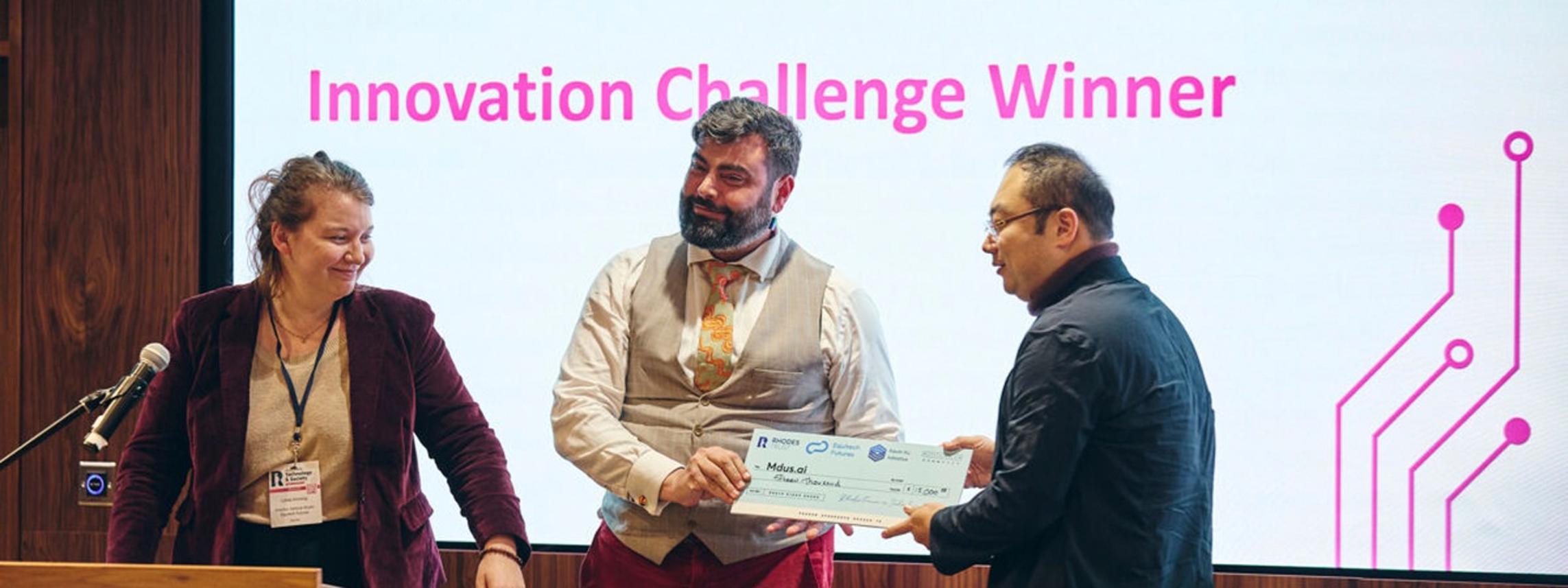
An Atlantic Fellow wins the Kevin Xu Innovation Challenge!
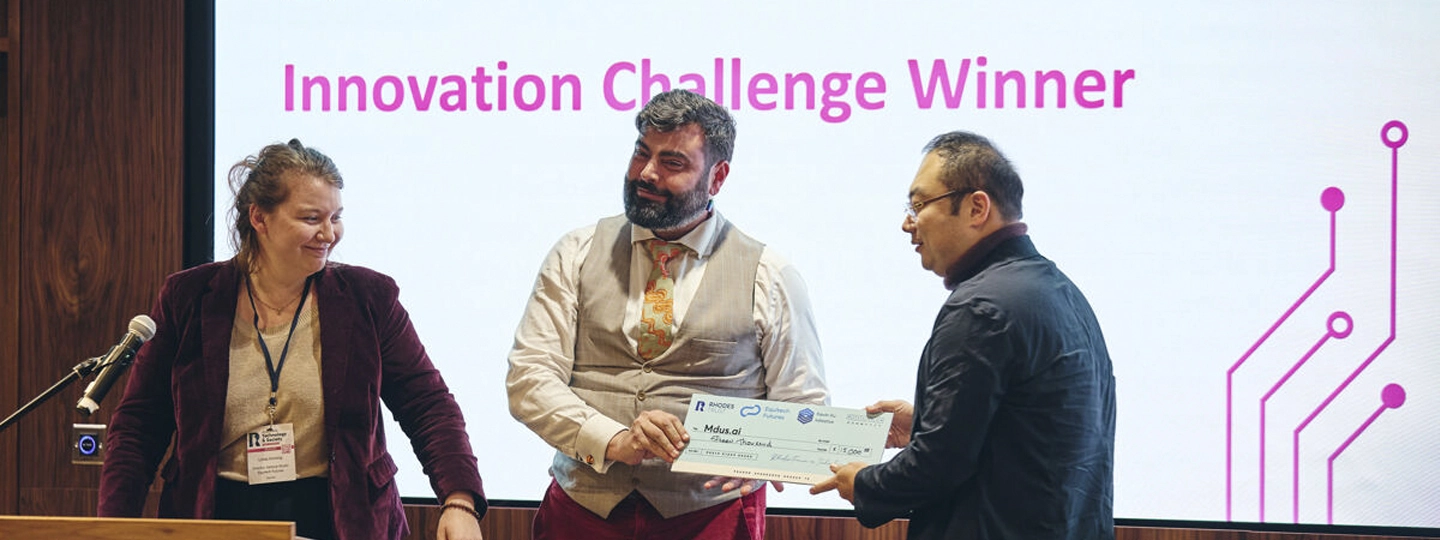
Congratulations to Atlantic Fellow for Health Equity U.S. + Global, Qusai Hammouri, and their team, who have won the inaugural Kevin Xu Innovation Challenge at this year’s Rhodes Technology and Society Forum with their groundbreaking project, MDus.ai. This innovative platform uses animated videos powered by artificial intelligence to transform complex medical information into accessible resources that are easy to understand, empowering patients worldwide to make more informed decisions about their health.
MDus.ai creates personalized content, including videos and interactive materials, tailored to individual conditions, cultural backgrounds and learning preferences. By bridging critical knowledge gaps, this project exemplifies how technology and medical expertise can come together to improve health equity on a global scale.
“MDus.ai directly addresses healthcare inequities by providing easily accessible and personalized medical information to those historically marginalized in the health care system. By focusing on culturally relevant content, we ensure that patients from underserved communities can make informed health decisions,” said Qusai.
The Rhodes Trust and Equitech Futures announced the prizewinner on Nov. 2 at the Rhodes Trust Tech and Society Forum at Rhodes House, Oxford. The inaugural Kevin Xu Innovation Challenge posed a crucial question to innovators worldwide: How can we create a society where AI isn't a threat to livelihoods, but rather a tool that empowers people to build more meaningful lives to create a more equitable future for all?
Qusai grew up in Jordan and later practiced medicine in the United States, where their experiences as a gay immigrant and a spine surgeon deeply influenced their work. Witnessing firsthand the barriers faced by underserved communities trying to access health care information, Qusai prioritized the need for accessible, culturally sensitive health care educational content.
“The future of MDus.ai is filled with potential for transformative impact in health care delivery. I envision our platform expanding globally, reaching even more underserved populations and enhancing health literacy on a larger scale,” said Qusai. “Ultimately, our goal is to revolutionize healthcare education, making it universally accessible and culturally inclusive, thereby contributing significantly to global health equity and improving health outcomes for all communities.”